The hill pushes.
The wall pushes back.
Central Kentucky sits on limestone, but it wears a heavy coat of clay — and wet clay moves. Slow in the dry months, fast after a spring rain. A retaining wall is how you tell a slope no, and mean it for the next forty years.
Most of a wall is buried
The block you see is about half the job. The rest is underneath, where nobody will ever compliment it — and it's the part that decides whether the wall stands for two winters or forty. Top to bottom, here's what you're paying for:
Cap course
Squared, glued, and level. The only part anyone ever notices.
Block courses, battered into the hill
Each course steps back into the slope so gravity works for the wall instead of against it. When the height calls for it, geogrid layers tie the wall deep into the ground it's holding.
Clean drain stone & perforated pipe
Water is what kills walls — it never stops pushing and it freezes eighteen or twenty times a Kentucky winter. We give it clean #57 stone to fall through and a pipe running to daylight.
Compacted crushed-stone base
Dug below grade, laid in lifts, and compacted until it rings. If this isn't dead level, nothing above it ever will be.
Undisturbed ground
We dig until we're standing on soil nobody's ever touched, and build up from there.
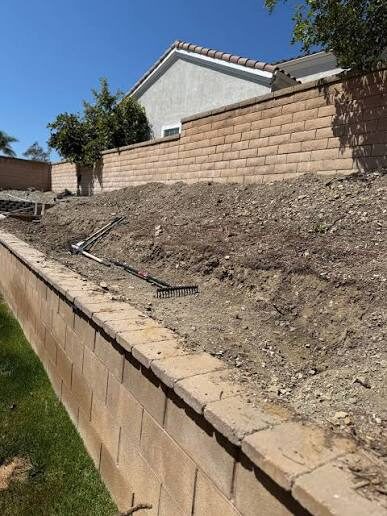
Simplified on purpose — every site gets its own dig, its own drainage, and its own spec.
Three ways to hold a hill
What we build depends on the height, the ground, and the look you're after. We'll tell you which one your yard actually needs — not the one with the biggest ticket.
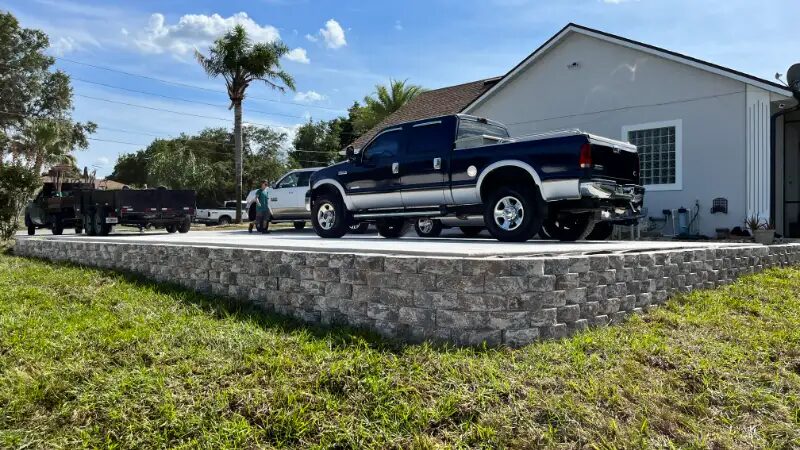
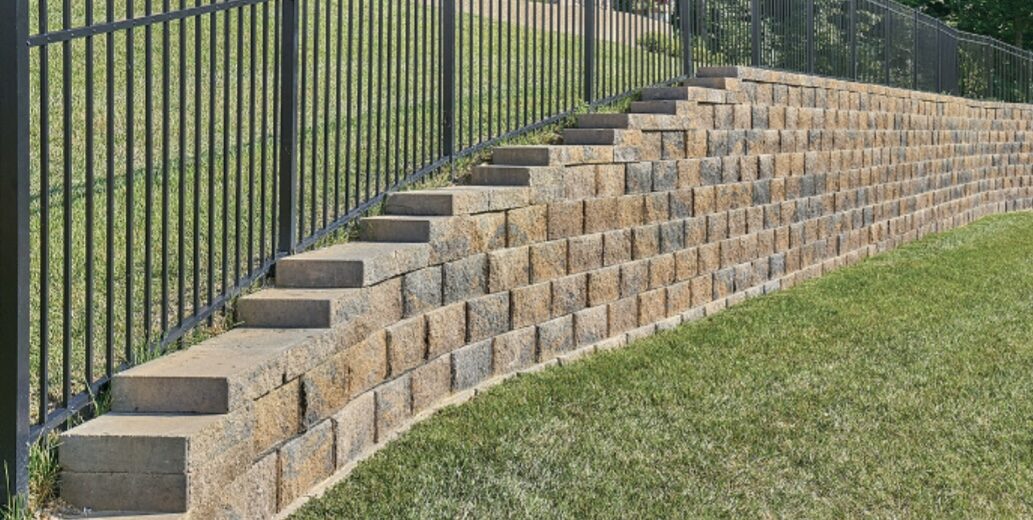
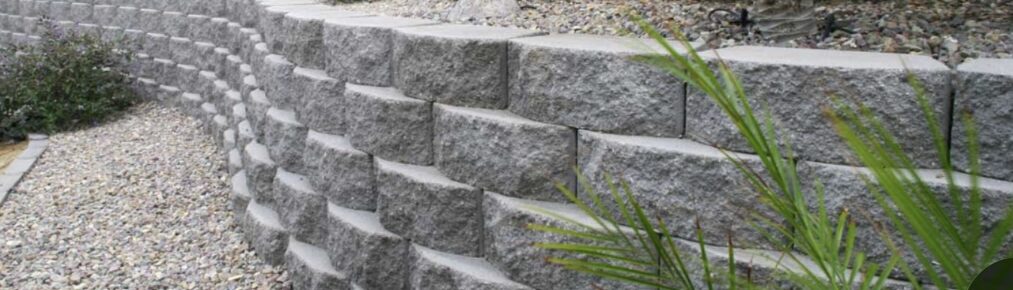
Built around the site
A garden edge and a long commercial grade call for different walls. The base, drainage, and attention to the slope do not change.
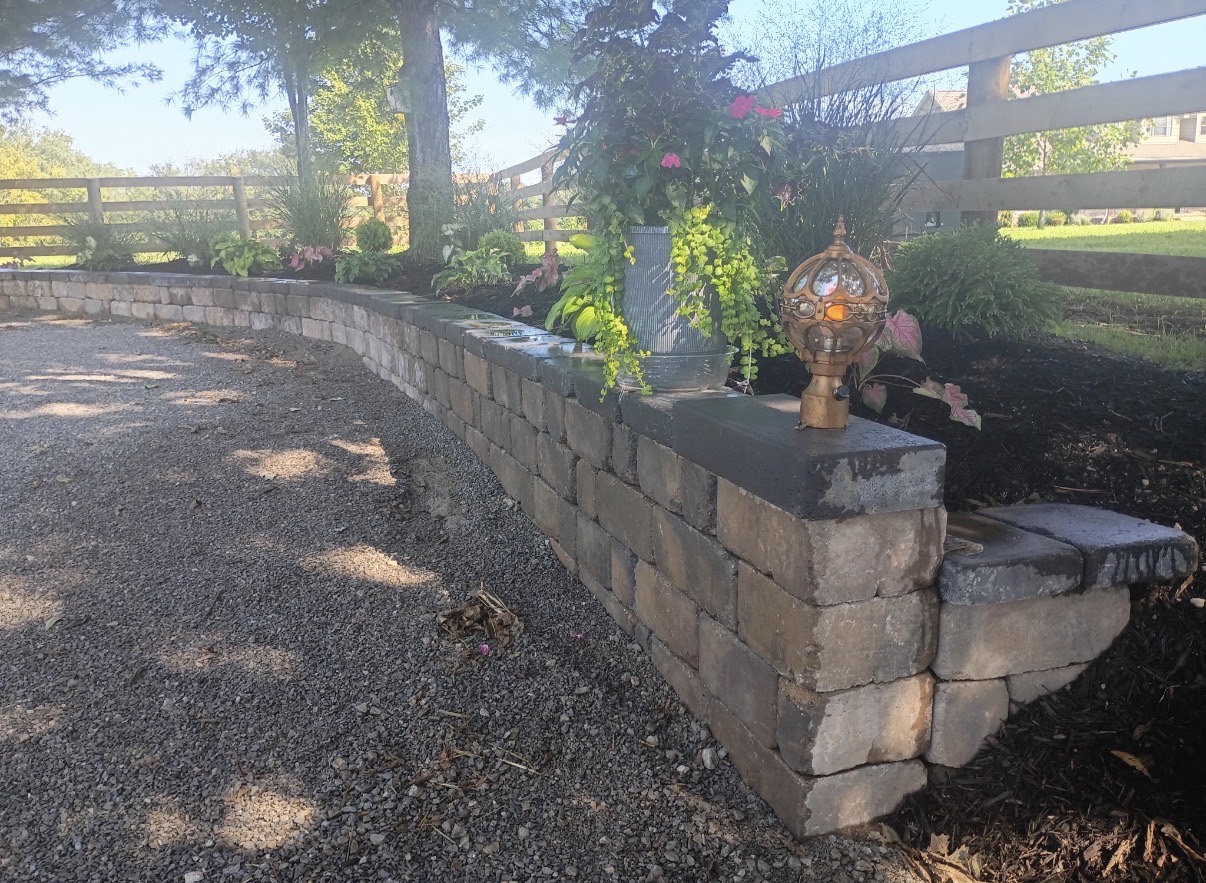
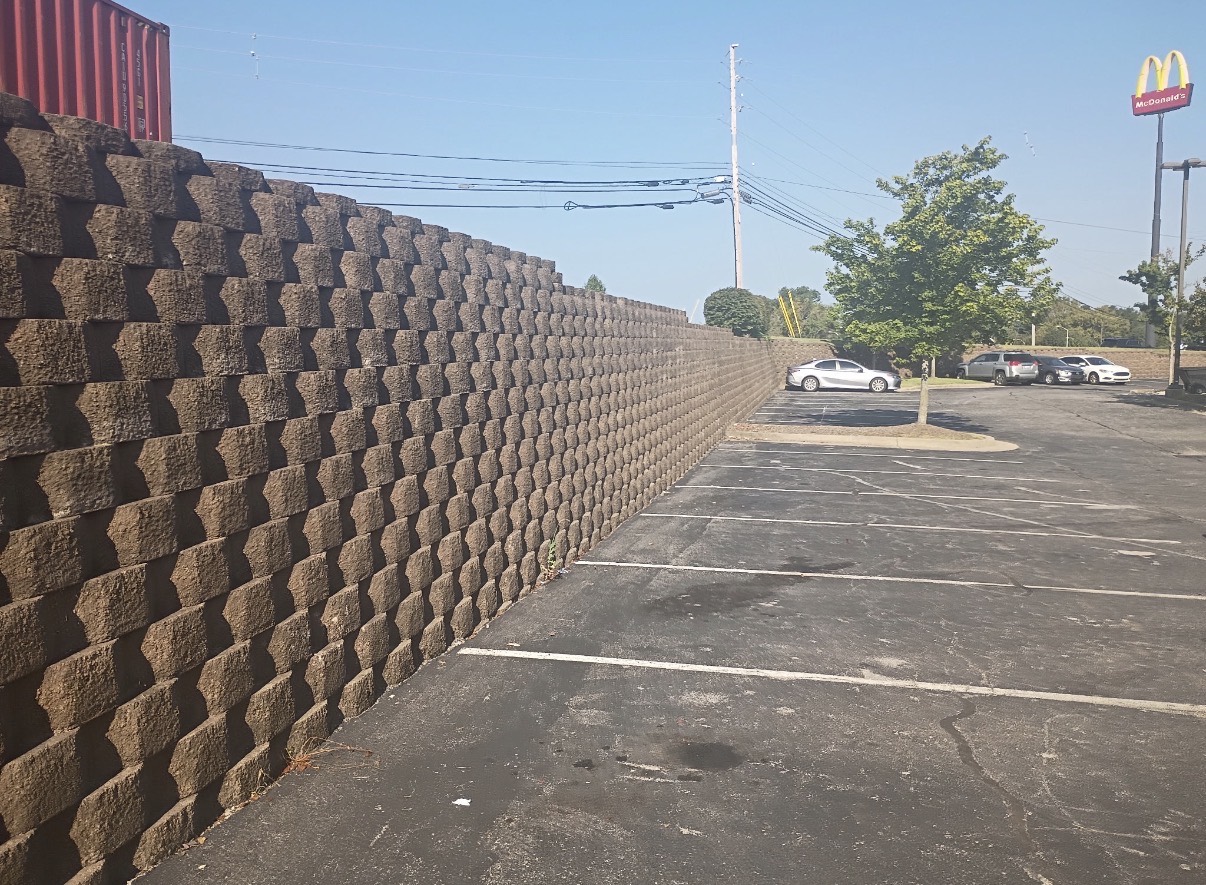
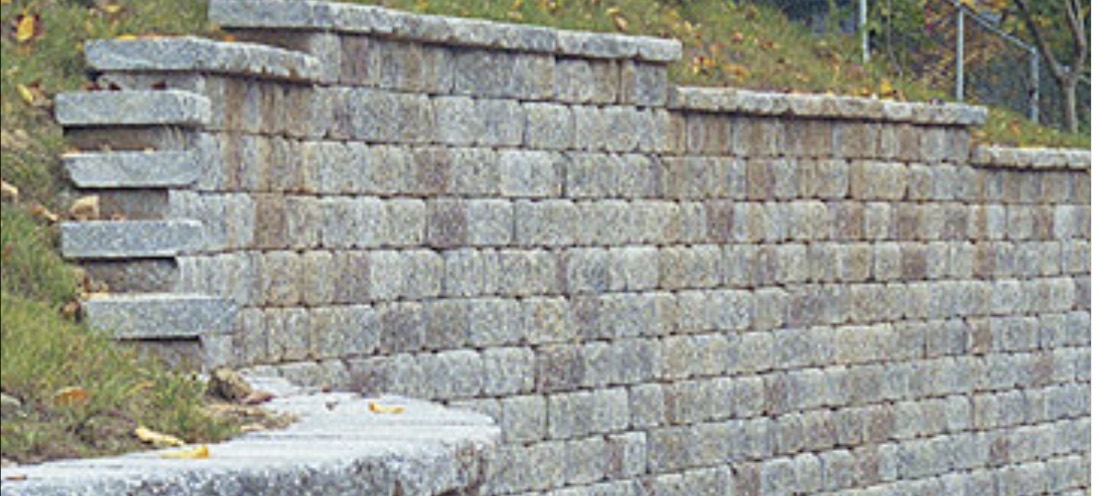

Stone country
Drive any pike out of town and you'll pass rock fences that were dry-laid before the Civil War — limestone lifted out of the field it stands in, stacked so well it hasn't needed anybody since.
That's the standard this part of the country set for putting stone on stone. We build with block and geogrid now, and drain pipe instead of luck, but the job hasn't changed: make it plumb, make it drain, make it outlast the argument about what it cost.
Straight answers
Why do walls fail?
Water, nearly every time. Clay swells when it's wet and shoves when it freezes, and a wall with no drainage takes that shove all winter. The wall that fell leaned for years first. Base and drainage are the whole game — it's why we talk about them so much.
How tall can you go?
To about four feet, a well-built gravity wall does the work on its own. Taller than that — or holding back a driveway, a pool, or a building — calls for geogrid and an engineer's stamp. We'll tell you which yours is on the first walk, before there's a number.
How long does a wall take?
Most residential walls run two days to a week — the dig and the base are most of it. You'll have the schedule before we start, and if weather moves it, you'll hear it from us first.
What does it cost?
It depends on height, length, access, and what the ground turns out to be — so we don't guess and we don't quote off photos. We walk it, then the number goes in writing. The price is the price.
Got a slope on the move?
Walk it with us before it gets worse. Free on-site estimates across central Kentucky.